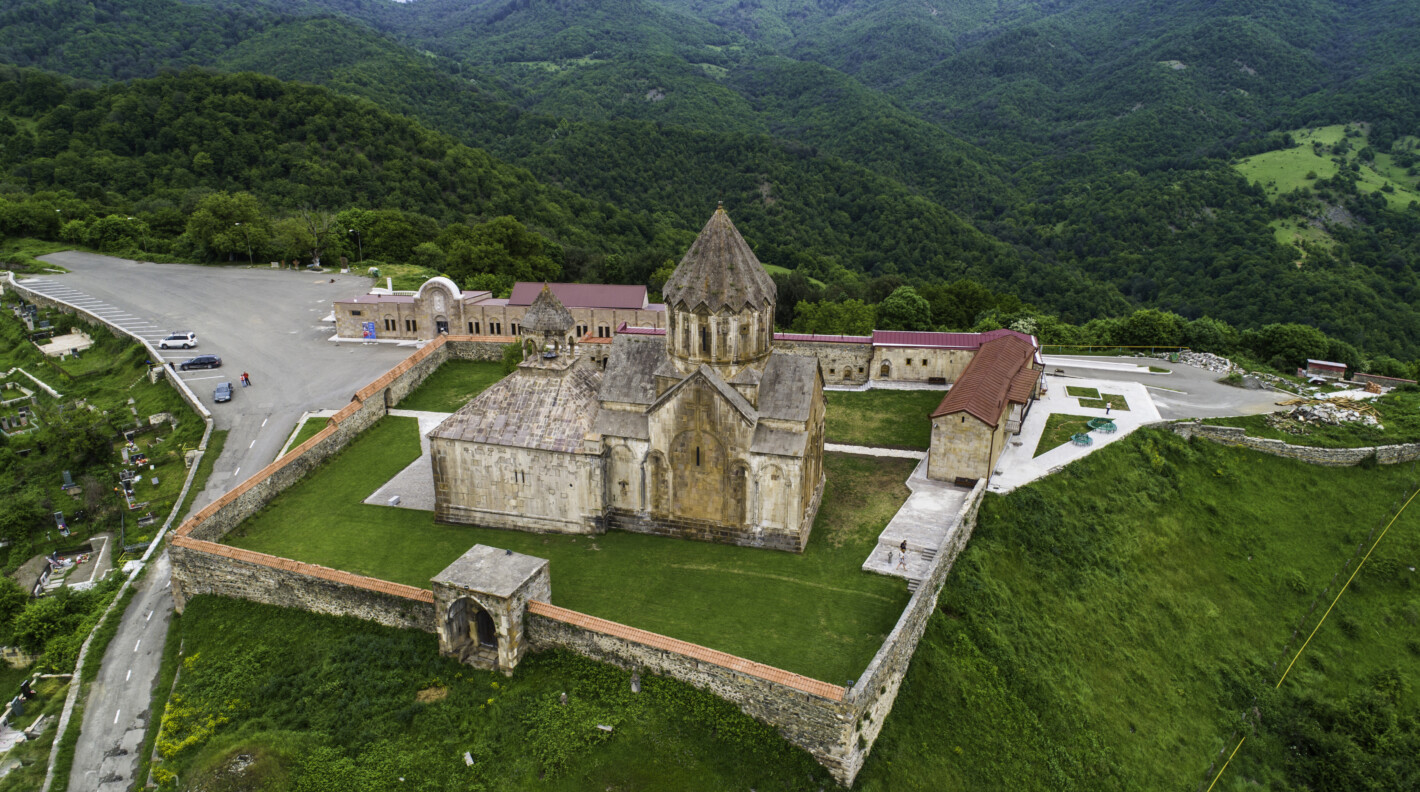
Armenian Cultural & Religious Heritage of Artsakh

A millennia-old heritage at risk

Artsakh (Nagorno-Karabakh) is home to a rich and distinctive Armenian cultural and religious heritage, shaped over millennia and reflected in its churches, monasteries, khachkars, cemeteries, archaeological sites, museums, manuscripts, monuments and other places of historical and cultural significance.

This heritage is an integral part of the historical and cultural identity of the Armenian people and forms part of the broader cultural heritage of humanity.

Following the 2020 war and most critically, Azerbaijan’s September 2023 military offensive that perpetrated an ethnic cleansing of more than 100,000 Armenians, the protection of this heritage has become an urgent international concern.

With the forced displacement of the entire indigenous Armenian population, preserving its cultural heritage is inseparable from preserving its historical identity and memory.

An international responsibility

The protection of Artsakh’s Armenian cultural heritage is not only a matter of national identity. It is grounded in international law and international obligations concerning the protection of cultural and religious heritage.

The International Court of Justice (ICJ), in its Order of 7 December 2021 in Armenia v. Azerbaijan, required Azerbaijan to take measures to prevent and punish acts of vandalism and desecration affecting Armenian historic, cultural and religious heritage, including churches, places of worship, monuments, landmarks, cemeteries and artefacts.

Read the ICJ Order of 7 December 2021 →

The Court subsequently addressed the situation again in its Order of 22 February 2023 concerning the Lachin Corridor, while reaffirming the provisional measures previously indicated.

Read the ICJ Order of 22 February 2023 →

The European Parliament has repeatedly called for the protection and preservation of Armenian cultural heritage in Artsakh and has expressed concern over its destruction, alteration and potential erasure.

Read the European Parliament Resolution of 10 March 2022 →

Read the European Parliament Resolution of 5 October 2023→

Read the European Parliament Resolution of 13 March 2024 →

Documenting and preserving the heritage

When cultural heritage is destroyed, altered or removed, the loss is not only physical. Historical evidence, inscriptions, symbols, cultural context and collective memory can also disappear.

Systematic documentation is therefore essential.

The resources below bring together comprehensive inventories, scholarly documentation and independent monitoring of Armenian cultural and religious heritage in Artsakh

COMPREHENSIVE HERITAGE INVENTORY

A detailed inventory of Armenian cultural heritage sites and monuments in Artsakh provides an essential record of the region’s historical and cultural landscape.

The inventory documents churches, monasteries, cemeteries, khachkars, archaeological sites, monuments and other places of cultural significance, creating a lasting documentary record of Armenian heritage.

The inventory is available in 2 downloadable volumes and provides extensive documentation of Armenian cultural heritage across Artsakh.

Add Your Heading Text Here

HERITAGE MONITORING

Independent heritage-monitoring initiatives provide continuing documentation of the condition and changes affecting Armenian cultural heritage in Artsakh.

Caucasus Heritage Watch

Caucasus Heritage Watch (CHW) is a research programme led by archaeologists at Cornell and Purdue Universities. It uses satellite imagery and open-source media to monitor and document endangered and damaged cultural heritage, with a particular focus on Nagorno Karabakh.

monument watch

Monument Watch – Monitoring the Cultural Heritage of Artsakh is an independent academic platform documenting the condition and changes affecting Artsakh’s cultural heritage.

Its work includes mapping and inventorying monuments, churches, monasteries, archaeological sites, museums and cultural centres, as well as monitoring destruction, alteration, reuse, removal and other changes affecting heritage sites.

Preserving the historical record

Documentation cannot replace a destroyed monument. But it can preserve evidence of what existed, record what has changed and help ensure that the historical record cannot simply disappear.

The EAFJD supports international efforts to document, monitor and protect Artsakh’s Armenian cultural and religious heritage, and calls on European institutions and the international community to uphold existing international obligations.

The heritage of Artsakh is not only the heritage of those who lived there. It is part of the cultural heritage of humanity. Its preservation is a responsibility that cannot be postponed.